Surfaces Built for Equipment Loads
Concrete Services in Hampton for driveways, equipment pads, and construction staging areas
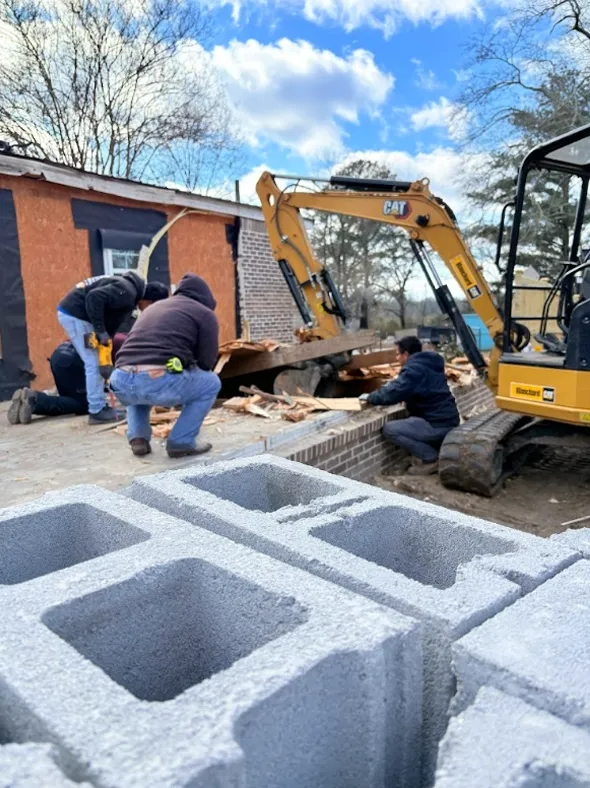
Concrete placement for equipment pads, shop foundations, long private driveways, and commercial staging areas requires close coordination with site preparation and grading phases to confirm subgrade stability before material is poured. Take Action Build Land Clearing & Concrete handles concrete work across Hampton and Clayton County—integrating placement and finishing directly with excavation and clearing workflows on substantial projects in the $15,000 to $20,000+ scope. Our service targets both private acreage owners and commercial sites where concrete surfaces must support heavy vehicles, machinery, and daily wear without cracking or settling over time.
The process includes an initial site assessment to verify subgrade compaction, precise placement coordination during grading, and finishing protocols tailored to the intended use of the surface. Concrete for heavy equipment pads, shop slabs, and commercial foundations demands thicker pours and reinforcement appropriate for high weight loads, while private residential driveways and staging areas require strategic drainage slopes to prevent water pooling. Properties along the Highway 19 corridor benefit from streamlined coordination between concrete and site prep phases, ensuring curing schedules align with your timeline and material deliveries occur without access conflicts.
Arrange an on-site assessment to review subgrade conditions, load requirements, and placement scheduling for your concrete project.
What Concrete Placement Actually Accomplishes
Concrete placement begins with subgrade verification to confirm compaction and drainage grades meet specifications, followed by formwork setup, reinforcement installation where required, and material pouring timed to avoid temperature extremes during curing. Finishing includes surface leveling, control joint placement to manage cracking, and curing protocols that protect the surface from premature loading or moisture loss. Projects across Clayton County—whether a high-load private driveway on 1 to 20+ acres or a commercial equipment pad—demand concrete work closely coordinated with clearing and grading so your building schedule stays on track and your property is ready for heavy equipment.
After concrete cures, you see a stable surface capable of supporting the intended load without cracking, defined drainage slopes that direct water away from your home, shop, pad, or driveway, and control joints positioned to manage thermal expansion. Heavy machinery, trucks, or personal equipment can be staged or operated on the surface without causing settlement, and the concrete remains level under repeated loading cycles. Properties prepared correctly allow custom builds or commercial construction phases to proceed without delays caused by unstable staging areas or surfaces that crack under weight.
Curing time varies based on temperature and humidity, and surfaces must be protected from premature loading to avoid cracking or surface damage. Projects that include concrete as part of a complete land prep package—from lot clearing and driveway grading to pad pours—benefit from integrated owner-operator scheduling so every phase aligns smoothly rather than creating bottlenecks.
Common Questions About This Service
Contractors and property owners working in Hampton and the surrounding region typically want to know how concrete work integrates with site preparation, what subgrade requirements are necessary, and how curing timelines affect project schedules.
What subgrade conditions are required before concrete is poured?
Subgrade must be compacted to specified density, free of organic material or loose soil, and graded to drainage slopes that prevent water from pooling beneath the concrete, and operators verify these conditions with compaction testing or visual inspection before placement begins.
How does concrete thickness vary based on intended use?
Equipment pads and surfaces supporting heavy machinery require thicker pours and reinforcement appropriate for the load, while driveways and walkways use standard residential thickness unless site conditions or usage patterns demand additional strength.
What happens if concrete is loaded before curing is complete?
Premature loading causes surface cracking, internal damage, and reduced long-term durability, and curing protocols specify minimum wait times based on temperature and humidity conditions before equipment or vehicles are allowed on the surface.
How are drainage slopes established during concrete placement?
Drainage grades are built into formwork and verified during finishing so water runs off the surface rather than pooling, and slopes are coordinated with overall site grading to direct runoff toward designated drainage paths or storm systems.
When should concrete work be scheduled relative to other site phases in Clayton County?
Concrete placement happens after excavation and grading are complete and subgrade is verified, and scheduling it early enough in the project timeline allows curing to finish before heavy equipment or construction traffic needs access to the surface.
Take Action Build Land Clearing & Concrete coordinates concrete placement with site preparation and grading work for both residential and commercial projects across Hampton and the Highway 19 corridor. Request a project estimate to review load requirements, subgrade conditions, and placement scheduling for your site.