Water Management That Protects Foundation Integrity
Grading & Drainage in Hampton for sites requiring proper slope establishment and water flow control before construction begins
Clay soils and freeze-thaw cycles in Clayton County create drainage challenges that affect foundation stability and site usability if water collects near structures or pools across cleared land. Take Action Build Land Clearing & Concrete establishes site grading and drainage systems that direct water away from building footprints and prevent erosion during storm events. Proper slope design ensures runoff flows to designated drainage points rather than settling into low spots where soil saturation weakens load-bearing capacity.
Grade assessment determines existing elevation changes and identifies where slopes need adjustment to achieve positive drainage, meaning water moves consistently downhill from high points to collection areas or swales. Soil compaction follows grading work to stabilize the surface and prevent settling under the weight of structures or paving. Drain lines coordinate with grading plans to capture subsurface water and channel it away from foundations before it saturates the soil.
Schedule a grade assessment to map existing elevations and determine slope corrections needed for your site drainage requirements.
What Proper Grading Prevents Over Time
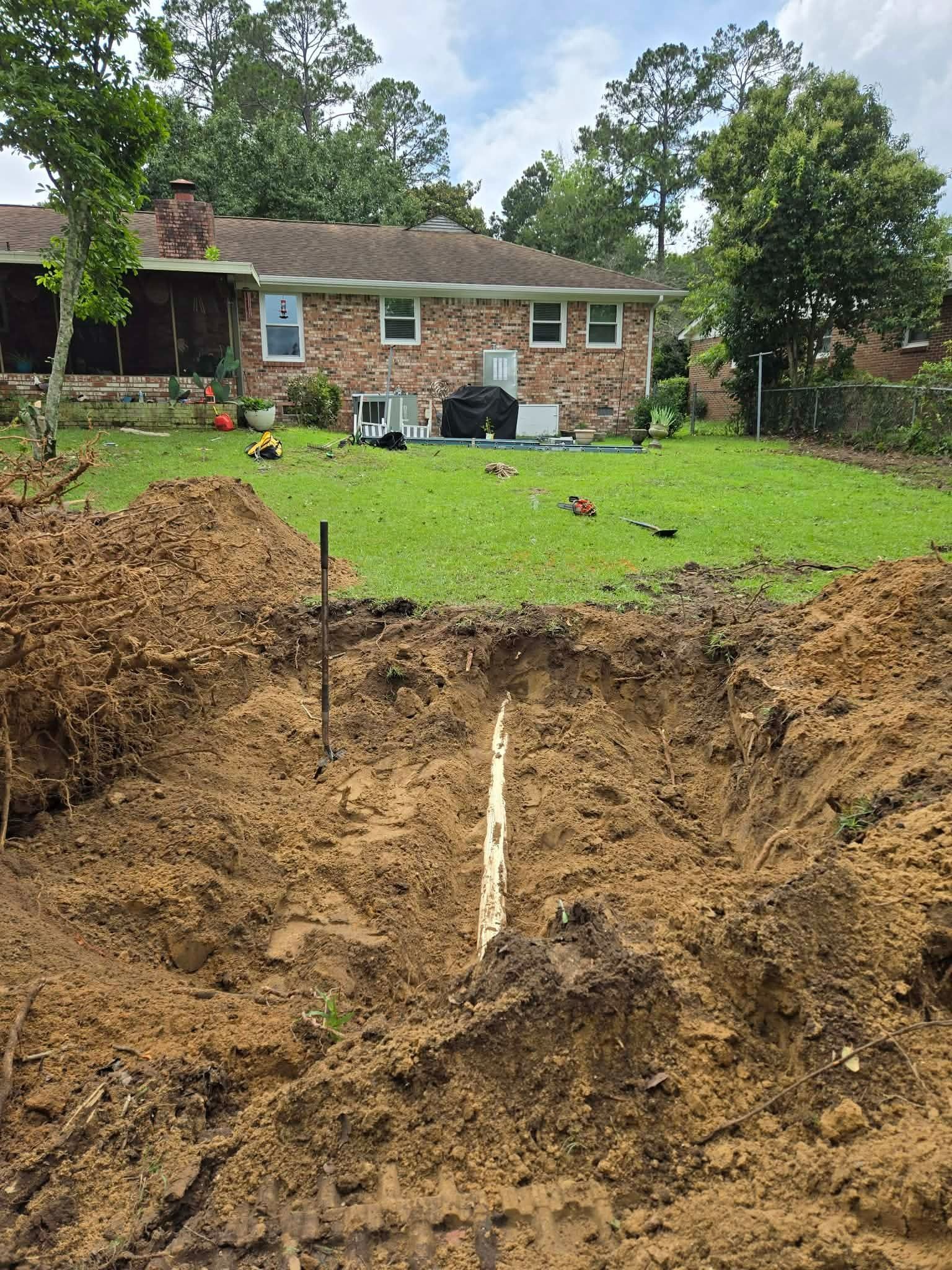
Grading work begins with evaluating the existing site topography and marking elevation changes needed to establish the target slope, typically a minimum of two percent grade away from building areas to maintain consistent water movement. Equipment shapes the soil surface by cutting high spots and filling low areas, then compacts the graded soil to create a stable base that resists erosion and settling.
Once grading completes, water no longer pools in depressions or flows toward foundation footings during rain events. Surfaces drain predictably toward swales or drainage structures, and the soil remains firm under load because compaction eliminates air pockets and voids that cause subsidence. Sites graded correctly before construction avoid the standing water, foundation cracking, and erosion patterns that develop when slope is inadequate or inconsistent.
Grading integrates with excavation and land clearing phases, occurring after stumps and debris are removed but before foundation work or paving begins. Projects requiring drain line installation coordinate grading with trenching and backfill to ensure subsurface drainage aligns with surface slope, preventing water from infiltrating foundation zones even during prolonged wet periods common in North Georgia.
Answers to Frequent Service Questions
Grading and drainage questions often focus on how site conditions in Hampton affect slope design and water management strategies.
What slope percentage is required for proper drainage in Clayton County?
Most sites require a minimum two percent grade away from structures, meaning the ground drops two inches for every ten feet of distance, ensuring water moves consistently without pooling near foundations or hardscaping.
How does clay soil affect grading and drainage work?
Clay soils in Hampton retain water longer than sandy soils, which increases the importance of positive surface drainage and subsurface drain lines to prevent saturation that weakens soil stability and causes foundation settling over time.
When should grading happen relative to other site work?
Grading occurs after land clearing and stump removal but before foundation excavation or paving, allowing the site to achieve proper elevations and drainage flow before construction loads are applied to the soil.
What is included in drainage system installation?
Drainage systems combine surface grading with swales, catch basins, or drain lines that capture and redirect water, with the specific components determined by site topography, soil type, and the volume of runoff generated during storm events.
Why does soil compaction matter after grading?
Compaction eliminates voids and air pockets in graded soil, preventing future settling that would reverse the drainage slope and create low spots where water collects, undermining the long-term effectiveness of the grading work.
Take Action Build Land Clearing & Concrete coordinates grading with excavation and site preparation to ensure drainage systems function as designed from the start. Arrange an on-site consultation to review topography and discuss slope adjustments needed for your project in Hampton and Clayton County.