Sites Cleared for Actual Construction Use
Acreage & Land Clearing in Hampton for Private Property & Commercial Development
Take Action Build Land Clearing & Concrete clears private 1–20+ acre properties and commercial sites across Hampton and the surrounding Clayton County area, preparing properties for home builds, custom structures, long driveways, development, and foundation work. Our service targets private landowners, contractors, and developers working with heavily wooded North Georgia terrain where variable soil conditions and thick vegetation require heavy equipment capable of handling larger-scope projects. Sites are cleared to build-ready condition with debris managed on-site or hauled depending on project requirements.
The work involves full vegetation removal, debris processing, and site assessment to confirm the property meets grading and drainage requirements before construction or land improvement begins. North Georgia properties often include dense tree cover, mixed hardwoods, and uneven topography that demand commercial-grade equipment sized for heavy land clearing rather than small residential trimming tools. Variable soil conditions across Clayton County mean clearing plans account for clay content, drainage paths, and equipment access before work starts.
Schedule an on-site assessment to review vegetation density, access routes, and debris management requirements for your property.
What Proper Site Clearing Requires
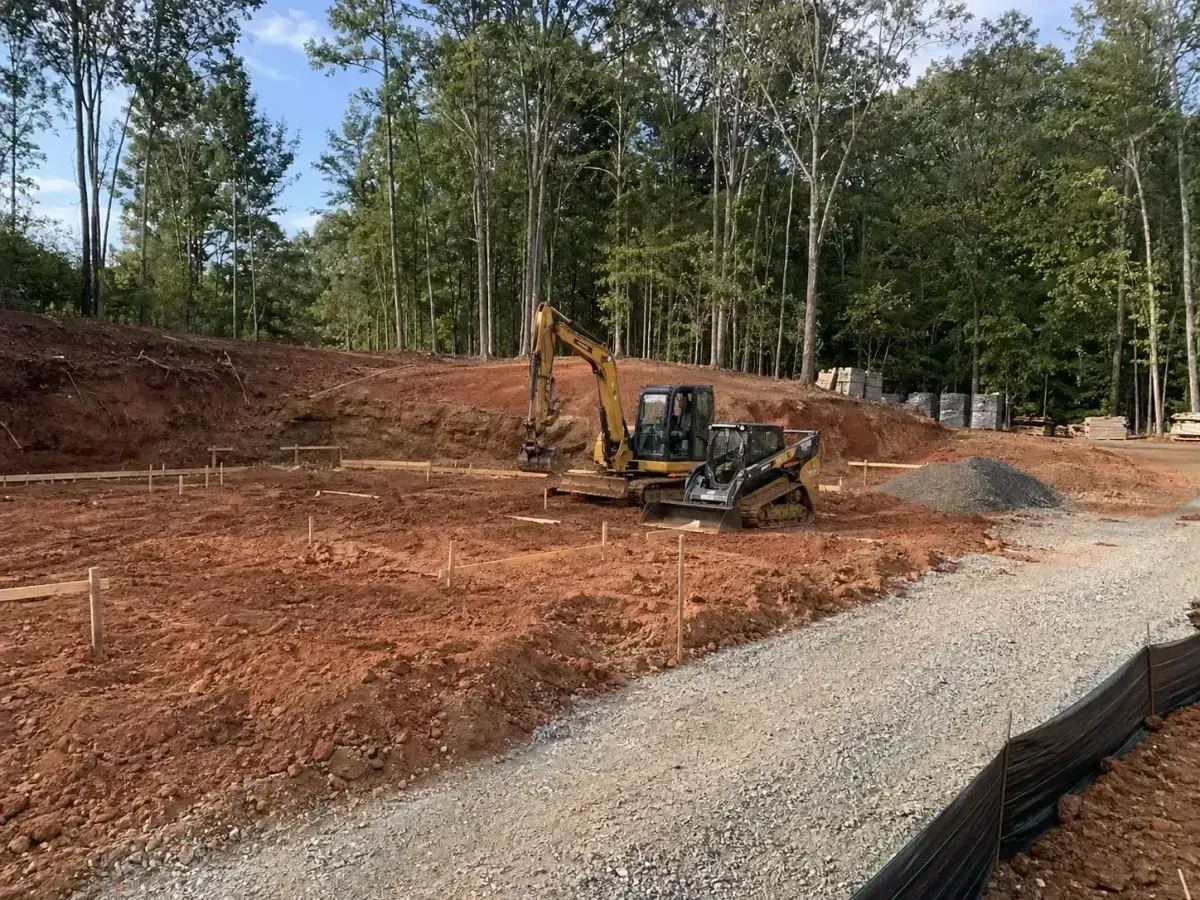
Clearing a site to build-ready condition means removing all unwanted vegetation down to workable soil, processing or hauling debris, and confirming the surface is prepared for grading equipment to establish final elevations. Heavy equipment cuts through deep root systems, removes stumps below grade, and strips topsoil layers where foundation, driveway, or hardscape work will occur. Whether for a custom home site on private acreage or a commercial development in the $15,000–$20,000+ range, the clearing phase determines whether grading and construction stay on schedule or stall due to hidden obstacles like buried stumps or uneven subsoil layers.
Once clearing is complete, you see a clearly defined build area with precise boundaries, no standing brush or trees, and debris either processed into rich mulch or staged for removal. Equipment can move freely across the property without obstruction, grading crews have complete visibility into soil conditions, and builders or foundation contractors can verify elevations against survey markers. The difference between a roughly cleared lot and one that is build-ready shows up in how quickly the next phase—whether pouring a house pad, building a shop, or laying commercial foundations—can begin without costly delays.
Substantial private acreage projects and larger commercial jobs require seamless coordination so clearing work aligns with site prep, foundation schedules, and material delivery timelines. Properties located along the Highway 19 corridor in Clayton County benefit from accessible haul routes, which reduce mobilization costs and allow debris to be removed efficiently when forestry mulching is not part of the scope.
Questions Before Starting Your Project
Contractors and property owners preparing sites in Hampton and the Southern Crescent region typically want to understand how clearing integrates with grading, what debris management options are available, and how soil conditions affect equipment selection.
What happens to the debris after vegetation is removed?
Debris can be processed into mulch on-site using forestry mulching equipment, which eliminates hauling costs and leaves material suitable for erosion control, or it can be loaded and hauled off-site if the project requires a completely clean surface with no organic material remaining.
How does North Georgia terrain affect the clearing process?
Variable soil conditions across Clayton County, including clay-heavy areas and mixed topsoil layers, require equipment capable of handling root extraction in dense or saturated ground, and operators assess drainage patterns before clearing to avoid creating low spots that trap water during grading.
When should land clearing be scheduled relative to other site work?
Clearing happens before any grading, excavation, or foundation work begins, and scheduling it early allows time for soil to settle and for survey crews to establish accurate elevations once the site is fully visible.
What size projects does this service handle?
The focus is on commercial-scale work in the fifteen-to-twenty-thousand-dollar range, which includes larger residential developments, equipment staging areas, and building sites where heavy machinery and multi-phase coordination are required.
What is included in a construction-ready site?
A construction-ready site has all vegetation removed to bare soil, debris cleared or processed, stumps extracted below grade, and surface conditions assessed so grading equipment can establish final elevations without encountering hidden obstructions.
Take Action Build Land Clearing & Concrete prepares sites across Hampton and Clayton County for private acreage projects and commercial developments that demand equipment capable of handling heavy workloads and variable terrain. Whether you need 1 to 20+ acres cleared for a custom home site, barn, and driveway, or full commercial site preparation, we bring the right machinery to get the job done right. Request a project estimate today to review your clearing scope, equipment needs, and debris management options for your property.