Trees Removed Without Leaving Hazards
Tree Services & Removal in Hampton for hazardous tree elimination and site clearing support
Heavily forested properties in Clayton County often include dead, leaning, or storm-damaged trees that pose hazards during construction, crowd usable land, or create fire risks in dry conditions. Tree removal prepares private 1 to 20+ acre properties and commercial sites for development by eliminating unwanted vegetation, clearing canopy obstructions, and processing debris for disposal or on-site mulching. Take Action Build Land Clearing & Concrete handles tree services and removal across Hampton, Locust Grove, and surrounding North Georgia areas—coordinating tree work directly with forestry mulching and land clearing workflows to deliver full-scope site preparation on substantial residential and commercial projects.
The service includes a thorough property assessment to identify hazards, safe felling techniques that avoid damage to surrounding structures or retained timber, and limb removal coordinated with debris processing equipment. Wooded North Georgia properties benefit from integrated tree removal and forestry mulching, which eliminates hauling costs and speeds up clearing timelines by processing debris on-site into valuable organic mulch rather than coordinating multiple haul truck cycles. Landowners preparing for a custom home pad, barn, driveway, or full commercial development often combine tree removal with stump grinding and excavation to deliver a build-ready surface.
Schedule a property evaluation to identify hazardous trees, assess debris volume, and review removal options for your land
The Difference Between Removal and Site Clearing
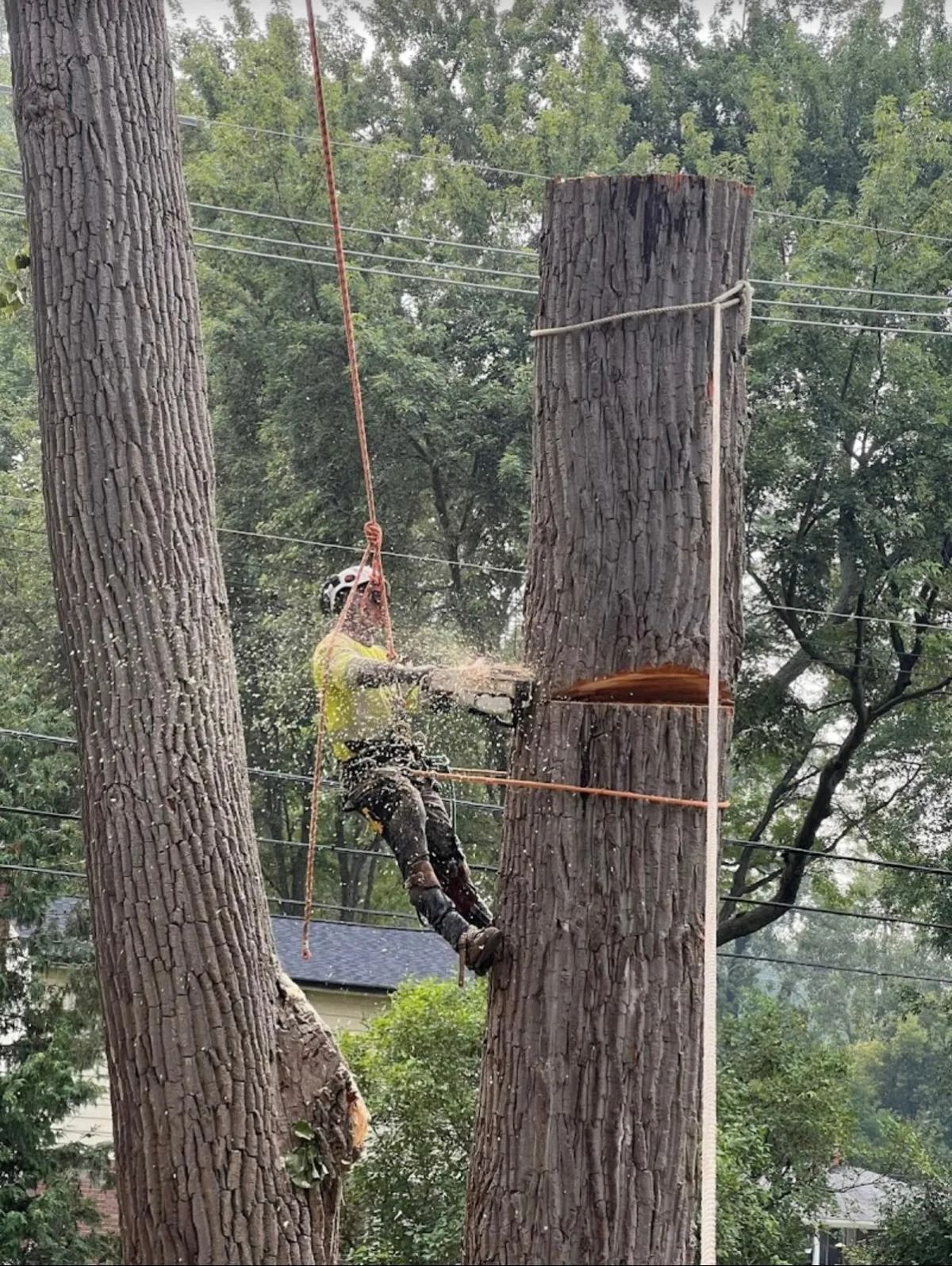
Tree removal focuses on eliminating specific hazards or unwanted timber, while full-scope site clearing includes removal, stump extraction, debris processing, and surface preparation for construction. Operators assess each tree for lean, rot, or structural weakness before felling, using controlled techniques based on proximity to existing homes, outbuildings, power lines, or property boundaries. For substantial projects in the $15,000 to $20,000+ range—whether clearing a 1 to 20+ acre private home site or preparing a commercial build—tree removal integrates directly with forestry mulching to process debris on-site, and with excavation to remove root systems that would otherwise interfere with pad grading or foundation work.
After trees are removed, you see a cleared property with no standing hazards, stumps managed to grade or extracted below ground level depending on your build requirements, and debris either processed into rich mulch or staged for hauling. Construction equipment, concrete trucks, and building materials can access the site without obstruction, grading crews have complete visibility into soil conditions and drainage paths, and fire mitigation is improved by eliminating dead timber and dry canopy material. Properties in Hampton and Locust Grove that undergo integrated removal and clearing reach build-ready condition faster than projects where each phase is scheduled separately with different subcontractors.
Storm cleanup demand increases after heavy weather events common to Clayton County, and properties with extensive tree cover benefit from proactive removal of damaged or leaning trees before they become hazards to your home, barn, or driveways. Coordinating tree services with site preparation and demolition phases prevents scheduling conflicts and allows heavy debris processing equipment to handle multiple material types in a single mobilization.
Questions Before Starting Your Project
Property owners and contractors working on wooded sites in North Georgia typically ask about hazard assessment, debris management options, and how tree removal integrates with larger clearing projects.
How are hazardous trees identified before removal begins?
Operators assess each tree for structural issues including lean angle, visible rot, dead limbs, root exposure, and proximity to structures or power lines, and trees posing immediate hazards are prioritized for removal before clearing work begins.
What happens to limbs and debris after trees are felled?
Debris can be processed into mulch on-site using forestry mulching equipment, which eliminates hauling costs and leaves material suitable for erosion control, or it can be cut into transportable lengths and hauled off-site if the project requires complete debris removal.
Does tree removal include stump management?
Stump management is coordinated based on project needs, with stumps either ground to grade for landscaping projects or extracted below grade for sites requiring excavation or foundation work, and root systems are severed to prevent regrowth.
When should tree removal be scheduled relative to other site work in Hampton?
Tree removal happens early in the clearing phase before grading or excavation begins, and scheduling it ahead of other trades allows debris processing equipment to operate without conflicts and clears access routes for heavy machinery.
How does storm cleanup differ from planned tree removal?
Storm cleanup prioritizes hazardous or fallen trees that pose immediate risks, often requires faster response timelines, and may involve coordination with utility companies if power lines are affected, while planned removal follows construction schedules and integrates with broader site preparation phases.
Take Action Build Land Clearing & Concrete removes hazardous and unwanted trees across Hampton and Clayton County, coordinating with mulching and clearing phases to prepare sites for construction. Request a site evaluation to review tree hazards, debris processing options, and removal scheduling for your property.