
Debris Processed Without Off-Site Hauling
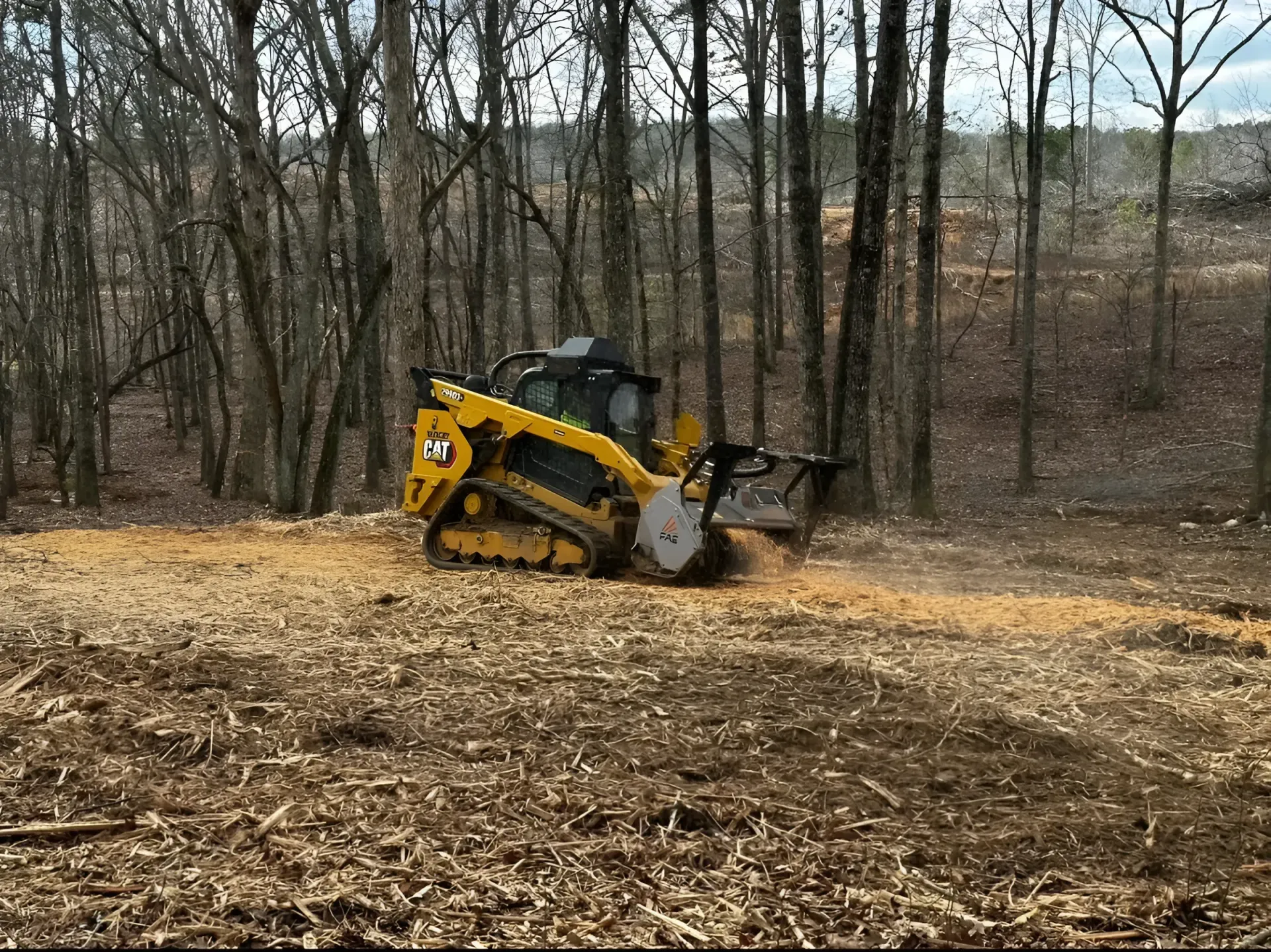
Forestry Mulching in Hampton for on-site vegetation processing and erosion control preparation
Wooded properties throughout Clayton County generate significant debris during land clearing, and hauling costs for timber and brush removal add up quickly on larger projects. Forestry mulching eliminates hauling by processing trees, brush, and timber on-site using specialized grinding equipment that converts debris into reusable mulch. Take Action Build Land Clearing & Concrete provides forestry mulching across Hampton, Locust Grove, and surrounding North Georgia areas, reducing waste removal costs while leaving finished mulch that landowners can use for erosion control or soil preparation.
The process grinds fallen trees and brush into mulch directly on the property, eliminating the need for off-site hauling and reducing project costs tied to debris removal. In wooded North Georgia areas where properties include dense tree cover and mixed hardwoods, on-site processing speeds up clearing timelines and avoids the logistical complications of coordinating multiple haul trucks. Finished mulch is left for the landowner to spread for erosion control, incorporate into landscaping, or have removed if the project requires a completely clear surface.
Schedule a property evaluation to review vegetation density, debris volume, and whether on-site mulching reduces overall project costs compared to hauling.
What You Notice Once Mulching Is Finished
Forestry mulching converts standing trees and brush into ground-level mulch without leaving logs, stumps, or debris piles that require separate handling. Equipment processes vegetation in place, and operators control mulch depth and distribution based on whether the material will be spread for erosion control or staged for removal. For properties in Hampton and Locust Grove where soil erosion is a concern after clearing, leaving mulch on-site helps stabilize exposed soil until vegetation is replanted or construction begins.
Once mulching is complete, the site shows cleared ground with an even layer of processed mulch, no debris piles requiring additional hauling, and root systems severed below the surface so regrowth is minimized. Landowners avoid hauling fees and gain material suitable for erosion control, while contractors benefit from faster clearing timelines without waiting for haul trucks to cycle through the site. The difference between mulching and traditional clearing shows up in project costs and the speed at which the property is ready for the next phase.
Mulch retention benefits North Georgia properties by reducing erosion on sloped terrain and improving soil moisture retention during dry periods. Sites that undergo forestry mulching instead of full debris removal often see lower overall project costs because hauling logistics and disposal fees are eliminated, particularly on larger commercial jobs where debris volume would otherwise require multiple truckloads.
Answers to Frequent Service Questions
Property owners and contractors in Clayton County typically ask about the differences between forestry mulching and standard tree removal, how mulch affects soil conditions, and whether on-site processing is suitable for all project types.
How does forestry mulching differ from traditional tree removal?
Traditional tree removal involves felling trees, cutting timber into transportable lengths, and hauling debris off-site, while forestry mulching grinds trees and brush on-site using specialized equipment that converts vegetation into mulch without requiring off-site disposal.
What happens to the mulch after processing is finished?
Finished mulch is left on-site for the landowner to use for erosion control, soil preparation, or landscaping, or it can be removed if the project requires a completely clear surface with no organic material remaining.
Does mulching work on all types of vegetation?
Forestry mulching handles trees, brush, timber, and mixed vegetation common to wooded North Georgia properties, and equipment is sized to process material up to a certain diameter, with larger trees sometimes requiring felling before mulching begins.
How does mulch retention help with erosion control in Hampton?
Leaving mulch on-site after clearing stabilizes exposed soil by reducing surface runoff velocity and improving moisture retention, which is particularly beneficial on sloped properties in Clayton County where heavy rain can cause erosion before vegetation is replanted.
When should forestry mulching be used instead of standard debris removal?
Mulching is most cost-effective when hauling logistics are complicated by site access, debris volume is high, or the landowner benefits from retaining mulch for erosion control or soil conditioning rather than paying for off-site disposal.
Take Action Build Land Clearing & Concrete processes vegetation on-site across Hampton and Locust Grove, reducing hauling costs and providing landowners with finished mulch suitable for erosion control. Request an estimate to review debris volume, equipment access, and whether on-site mulching reduces total project costs for your property.