Ground Prepared to Support Actual Loads
Site Preparation & Excavation in Hampton for construction foundations and grade establishment
Building in Clayton County requires precise grade establishment and foundation preparation where freeze-thaw cycles and seasonal drainage affect long-term structural stability. Take Action Build Land Clearing & Concrete handles site preparation and excavation work across Hampton and surrounding North Georgia areas—coordinating clearing, grading, and concrete phases to prepare custom home pads, shops, barns, and commercial building sites for construction. Our work focuses on substantial projects—typically in the $15,000 to $20,000+ range—where proper pad leveling, drainage control, and site preparation determine whether your project stays on schedule and on budget.
Site preparation includes excavation layout, material staging for foundation or concrete work, and grade establishment to direct water away from building footprints, driveways, and structures. Excavation depths are determined by foundation requirements and soil conditions, and we assess clay content and compaction characteristics before digging to avoid creating unstable subgrade layers. In areas with heavy clay soils common throughout Clayton County, drainage paths must be defined during excavation rather than corrected later when your home foundation, barn pad, or hardscape is already in place.
Arrange an on-site consultation to review foundation requirements, drainage paths, and excavation specifications for your property.
How Site Excavation Addresses Foundation Stability
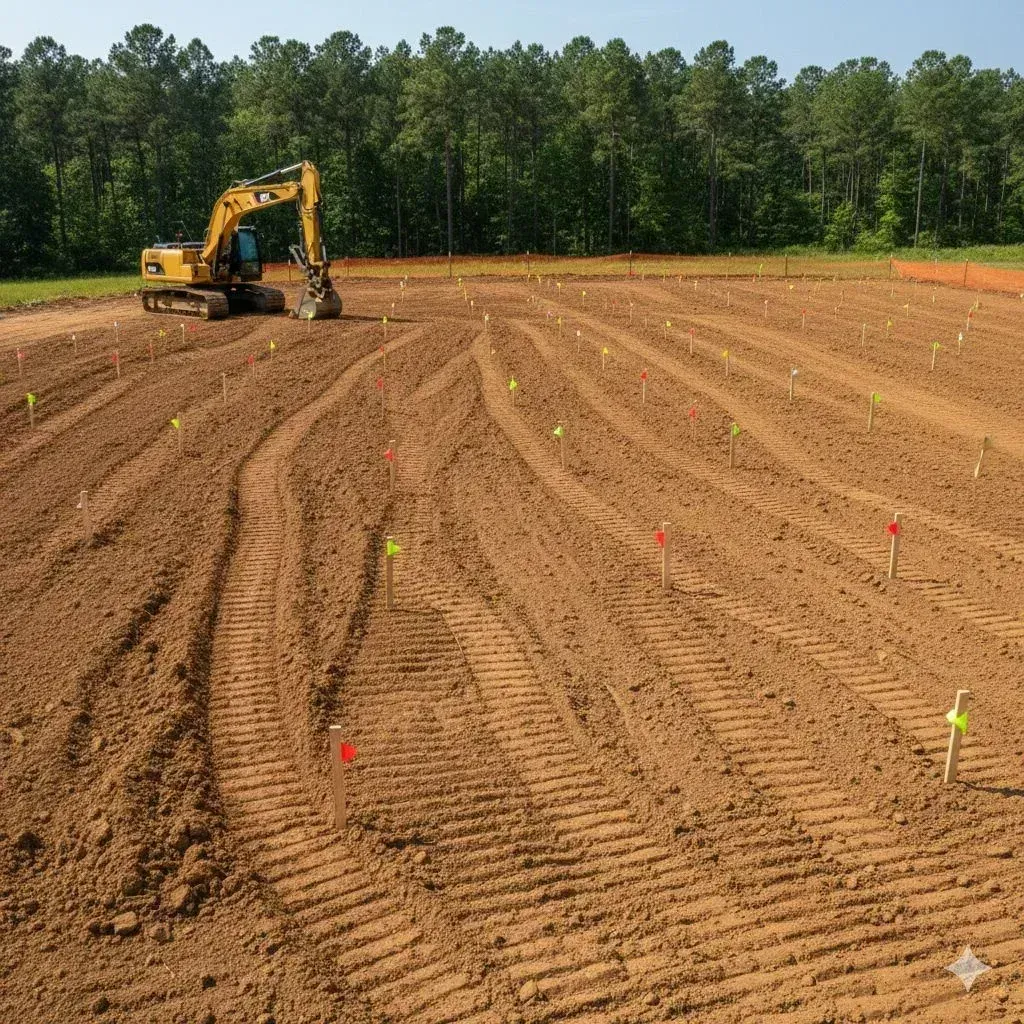
Excavation for construction foundations involves removing soil to specified depths, verifying subgrade compaction, and establishing drainage grades that prevent water from pooling near building footprints. Operators use survey markers to confirm elevations match engineering plans, and material removed during excavation is either stockpiled for backfill or hauled off-site depending on soil quality and project needs. For commercial projects along the Highway 19 corridor, coordinating excavation with demolition and clearing phases prevents delays caused by equipment conflicts or staging area shortages.
After excavation is complete, you see a foundation footprint at the correct depth with stable subgrade, defined drainage slopes that direct runoff away from the building envelope, and staging areas prepared for concrete trucks or foundation crews. Survey stakes remain in place so trades can verify elevations before pouring, and material stockpiles are positioned to allow backfill without additional hauling. Sites prepared correctly allow foundation work to begin immediately without regrading or additional soil removal.
Freeze-thaw stability in North Georgia depends on compacted subgrade and proper drainage, which means excavation work includes verifying that soil layers beneath foundations will not shift when seasonal moisture changes occur. Projects in Newnan and Clayton County benefit from early coordination between excavation and concrete contractors so curing schedules align with weather windows and material deliveries happen without site access conflicts.
What Property Owners Usually Ask
Private landowners, custom builders, and commercial developers working in Hampton and the Southern Crescent area typically ask about drainage requirements, excavation depth standards, and how soil conditions affect foundation preparation timelines.
What determines excavation depth for a building foundation?
Excavation depth is specified by engineering plans based on foundation type, load requirements, and frost line depth, and operators verify measurements against survey markers to confirm the subgrade matches design elevations before foundation crews begin work.
How does drainage compliance get established during site preparation?
Drainage grades are cut during excavation to direct water away from building footprints, and slopes are verified with laser levels or survey equipment to confirm runoff paths meet local stormwater codes before hardscape or foundation work locks in final elevations.
What happens to excavated soil during site preparation?
Soil removed during excavation is stockpiled on-site for backfill if compaction and moisture content are acceptable, or hauled off-site if clay content or contamination makes it unsuitable for reuse around foundations.
When should excavation be coordinated with other trades?
Excavation happens after land clearing is complete and before concrete or foundation work begins, and scheduling it early allows time for subgrade inspection and correction of any drainage issues before construction timelines become compressed.
What site conditions in Hampton affect excavation planning?
Variable soil conditions across Clayton County, including clay-heavy areas and mixed topsoil layers, require operators to assess compaction characteristics and drainage behavior before finalizing excavation depths and backfill strategies.
Take Action Build Land Clearing & Concrete coordinates site preparation and excavation work with clearing and concrete phases for both residential and commercial projects across Hampton and North Georgia. Request a site evaluation to review grading plans, foundation specifications, and material staging requirements for your project.